
Fig. MI.S.TH.01; Authors own, Thurso Map
THURSO
Rural Healthcare - Eilidh Bauchop
SIZE: 4.82 km²
POPULATION: 7,426
POP. DENSITY: 1,540 people/km²
URBAN CLASSIFICATION (people/km²)
HYPER URBAN AREA (≥15,000)
DENSE URBAN AREA (1,500-14,999)
URBAN CLUSTER (300-1,499)
RURAL SETTLEMENT (50-299)
SPARSE RURAL (10-49)
REMOTE (1-9)
WILDERNESS (<1)
*BASED ON DEGURBA (EU Degree of Urbanisation) DATA
KEY ISSUES
Lack of women's healthcare
Access Times to Healthcare Services
Healthcare Staff Retention
Fuel Poverty
Thurso is a town in the far north east part of Scotland. Its remote and isolated location in Caithness (3 hours north of Inverness by train) is accessible via train and the vital A9 with a ferry link from the port of Scrabster to Stromness on Orkney which can be seen from its exposed north coast. The population of just under 4000 people relies heavily on the Dounreay nuclear research establishment for employment. Thurso's community is tended to by Dunbar Hospital.
Following a downgrading of the maternity services in Wick, CHAT (the Caithness Health Action Team) have been campaigning for consultant-led maternity support to return to the Caithness general hospital.
The service was replaced by a midwife-led unit in 2016 because of safety concerns which has caused outcry from all over Caithness.
People in the north Highlands can face round trips of 210 miles (338km) or more to give birth in Inverness. In some instances women on their way to the hospitals in Inverness or Aberdeen have even had to give birth on the side of the A9.
Caithness
About
The region in which Thurso is located

Fig. MI.S.TH. 02; Author’s own, ‘North East Scotland map’

Fig.MI.S.TH.03; ‘Caithness news article collage’ (BBC)( John O'Groat Journal & Caithness Courier)
A Declining Service
NHS Highland said in that in 2014, there were 254 births to Caithness women.
Of these two thirds were born in the maternity unit in Caithness General with the remainder born in Raigmore. The majority of babies born in Raigmore fell into the high risk category. (BBC news, 'Newborn baby's death 'potentially avoidable'', 2015)
Last year, just 8 women gave birth locally at Caithness General’s maternity unit (CMU) in Wick, compared to 202 in Inverness. (The press and journal, 'Only eight babies delivered at Caithness maternity unit last year as number at Raigmore soars' 2023)
Local women travelling further


Fig.MI.S.TH.04; Author’s own, ‘Thurso photo collage’
Dunbar Hospital
Thurso's local hospital
During our visit to Thurso we visited the main Dunbar Hospital. Approaching the stoic Victorian building we noticed the mammogram van outside.
We spoke briefly to a nurse at Thurso's Dunbar Hospital who expressed the town's frustration at the absence of a consultant at Wick's general hospital or midwife led consultancy.
When asked about the mammogram van outside the nurse told us that it only drives up to Thurso every two years at the very most.

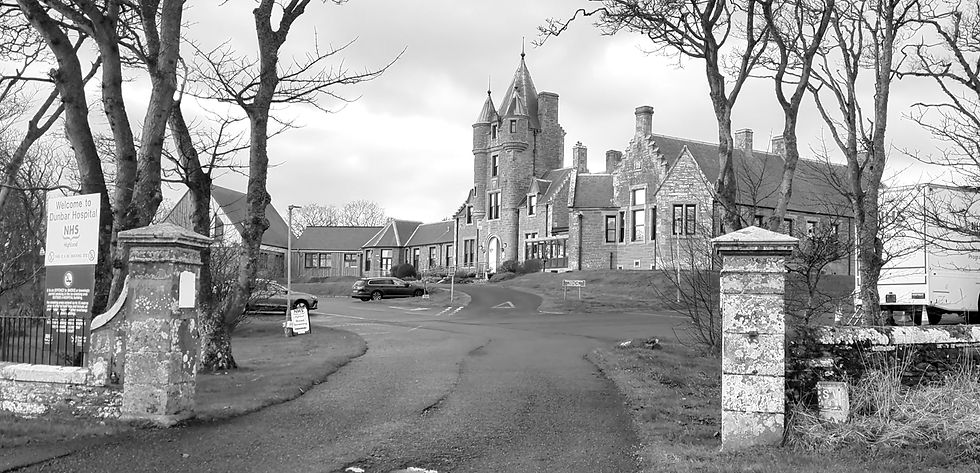
Fig.MI.S.TH.05; Author’s own, ‘Breast screening sign’
Fig.MI.S.TH.06; Author’s own, ‘Dunbar Hospital photo’

Fig.MI.S.TH.07; Author’s own, ‘Train Journey’

Fig.MI.S.TH.08; Author’s own, ‘Thurso Castle’

Fig.MI.S.TH.09; Author’s own, ‘Thurso Beach’
This regionally specific issue is only a sample of a major trend in isolated locations underpinned by systemic issues including the underfunding of research into women's health and the societal dismissal of women's issues and pain.
Women's Healthcare
Underfunded and underresearched

Fig.MI.S.TH.10; Author’s own, ‘Women’s healthcare infographic’ based on (“Why Nearly 80 Percent of Autoimmune Sufferers Are Female…”, Scientific American, 2021), (“Depressive disorder…”, WHO, 2025), (“Women are 50% more likely than men to...”, BHF, 2016), (“Menopause and bone loss”, Endocrine Society, 2022), (“Global average life…”, Our world in data, 2025), (“Menstruation cycle”, Britannica, 2025), (“Your antenatal appointments, NHS, 2023), (“Diagnostic Testing”, Circle health group, 2025), (“Your antenatal appointments, NHS, 2023), (“Data analytics in healthcare…”, Data Channel, 2025), (“Life Expectancy in Scotland”, National Records of Scotland, 2024), (“Average age of mothers at childbirth in the UK..”, Statista, 2025), (“Barriers in access to healthcare for women”, National Library of Medicine, 2021)