
Fig.MI.P.PO.01; Authors Own, 'Map of Porto'
PORTO
Community Innitiatives - Abdu Mahdi - Governance - Luca Sode - Collective Preparedness - Miruna Georgescu - Urban Healthcare - Bota Issatayeva -
SIZE: 41.42 km²
POPULATION: 252,687
POP. DENSITY: 6,100 people/km²
URBAN CLASSIFICATION (people/km²)
HYPER URBAN AREA (≥15,000)
DENSE URBAN AREA (1,500-14,999)
URBAN CLUSTER (300-1,499)
RURAL SETTLEMENT (50-299)
SPARSE RURAL (10-49)
REMOTE (1-9)
WILDERNESS (<1)
*BASED ON DEGURBA (EU Degree of Urbanisation) DATA
KEY ISSUES
Gentrification, Rising Cost of Living and Loss of Agency for Locals
Healthcare Inequalities, lack of healthcare infrastructure and access, medical staff shortage
Global Technological Investments in Porto- Technology Transforming Research, Climate Injustice, Education and Activism
Preparedness for Climate-Related Hazards such as Flooding and Overheating

Overview Analysis


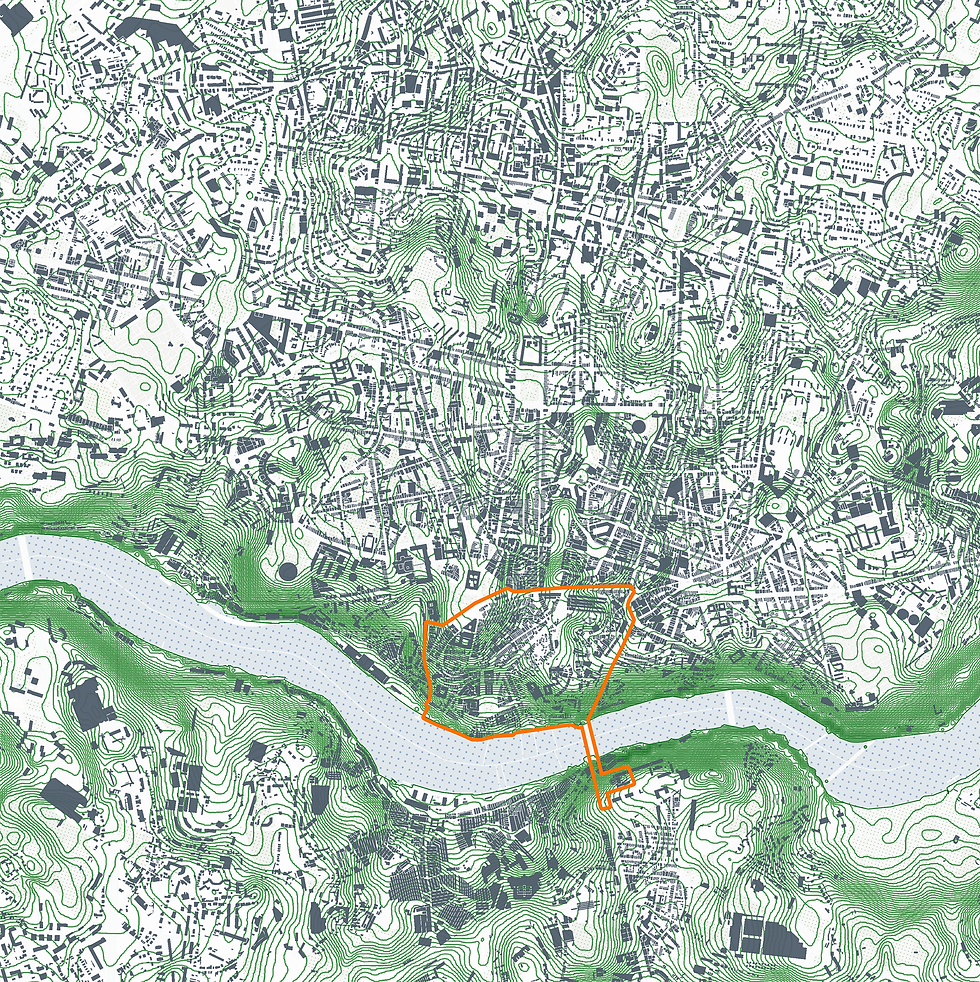
Fig.MI.P.PO.02; Authors Own, 'Porto Topography and UNESCO Boundary'
Porto sits within the valley of the Douro River. The river shapes how the city is read and navigated, and is most vividly experienced at places like the Ribeira waterfront and the Luís I Bridge. This steep valley landscape is felt throughout the city, with many buildings designed with entrances on multiple levels to adapt to the terrain.

Fig.MI.P.PO.03; Authors Own, 'Photograph of Porto'

Fig.MI.P.PO.04; Authors Own, 'Porto River Topography'


Porto's Vulnerabilities


Rising housing costs and gentrification are displacing long-term residents, while rental markets are saturated and older housing stock deteriorates, requiring urgent investment. These abandoned and underutilised buildings present opportunities for strategic reuse, offering potential solutions for affordable housing and vital community spaces.
More than 30,000 buildings in Porto's city centre sit vacant.
- Manuel Poças, July 2024
14,806 properties are listed on Airbnb in Porto.
- Inside Airbnb, September 2024
Porto has the 2nd highest population of American expats in Portugal.
- Portugal.com, December 2024

Gentrifying Areas in Porto


Porto Vacant Buildings
(per km²)


Porto Density Diagram
(population per km²)


Foreign investment has revived the city after the 2020 pandemic, but with this boost also comes the danger of further gentrification. With rising housing costs and tourism, short-term rental technology platforms like Airbnb allow real estate assets to be more profitable.

Investment in tourism infrastructure and other developments have made the city more attractive to upper-middle class expats from the UK and USA. With this influx of wealthy expats and tourists, increasing house prices in Porto are further exacerbated, making them unaffordable for long-term residents. Areas that are attractive to tourists become increasingly empty of locals.
Fig.MI.P.PO.13; Authors Own, 'Gentrifying Areas in Porto, (Population and housing census 2021 - population grids, 2021)
Fig.MI.P.PO.14; Authors Own, 'Porto Vacant Buildings', (Population and housing census 2021 - population grids, 2021)
Fig.MI.P.PO.15; Authors Own, 'Porto Densirt Diagram', (Population and housing census 2021 - population grids, 2021)
Fig.MI.P.PO.16; Authors Own, 'BnB Sketch'
Fig.MI.P.PO.17; Authors Own, 'Porto Displacement Sketch'
'Porto has presented itself as an attractive and dynamic city, a regional hub for innovation, experimentation and enterprise'
- Sustainable Development Report, Porto Municipality 2023
Porto's Opportunities


Fig.MI.P.PO.23; Authors Own, 'Terra Solta Sketch'
Community led initiatives are emerging as a strong element of resilience upon the rising levels of gentrification in Porto, specifically in the suburb of Campanha.
Terra Solta is a volunteer-run community farm managed by the Associação Movimento Terra Solta. The land here was once a farm estate, part of a more rural landscape, which was claimed by the growth of the city. Their mission is to reclaim forgotten land to grow organic food, foster environmental awareness, community, and a healthier, sustainable way of living.
Terra Solta grows vegetables, herbs, fruit trees and keeps organic gardens adhering to principles of biodynamic agriculture.
On Saturdays, Terra Solta is open to the public. Visitors can volunteer, help with gardening, participate in meals cooked from the harvest, attend community events, workshops, and festivals. A kitchen and a library on-site help to anchor Terra Solta as a community landmark (Terra Solta, Sustainable Urban Delt, 2023).


Fig.MI.P.PO.27, 28, 29; Porto

MIRUNA
ABDU
SITES OF INTEREST AROUND PORTO
BOTA
LUCA
Fig.MI.P.PO.30; ‘Porto Map'