Climate

Fig. ME.P.CC.01; Authors own, Portuguese Landscape Thumbnail.
RESEARCH JUSTIFICATION
As climate change accelerates, Portugal faces rising challenges concerning water scarcity, climate risks, and ecosystem degradation. Understanding these issues is crucial for recognising the impacts on communities.
How is climate change impacting Portugal?
Environmental Impacts
Water Scarcity
Portugal’s water table is sinking. A water table is the upper level of the saturated zone of groundwater, the point below the Earth's surface where all pores and spaces in the soil and rock are filled with water. This sinkage leads to wells running dry, land subsidence, and contamination of aquifers (a body of permeable rock which can contain or transmit groundwater). Essentially, Portugal’s main source of water is disappearing.
Experts attribute Portugal’s agricultural sector as a major contributor to the country’s growing water scarcity. Much of the industry depends on water-intensive crops and outdated irrigation methods that waste significant amounts of water. (Tridge, 2020)
In the Algarve region, a 600-hectare avocado plantation has drawn criticism from environmental organizations such as Quercus, which warn that avocados require exceptionally high amounts of water, particularly unsustainable in such a dry region.
(Tridge, 2020)
A desalination plant is currently under construction in the Algarve region and should be completed in 2026. Excessive and unregulated groundwater extraction in this region has caused saltwater to mix with the groundwater, rendering it unusable and damaging the soil. Desalination efforts and strict regulations are needed to prevent further damage to the ecosystem. (The Portugal News, 2025)
With a steady stream of water still coming out of taps, many people in Portugal remain unaware of the severity of the crisis. The hidden nature of groundwater depletion makes the problem easy to ignore, yet its consequences are far-reaching and long-lasting. Without significant changes in agricultural practices, stricter water management policies, and greater public awareness, Portugal risks facing irreversible damage to its ecosystems, food production, and long-term water security. The challenge now lies not only in developing technological solutions like desalination but also in fostering a cultural shift toward valuing and conserving one of the country’s most vital and vulnerable resources.

Fig. ME.P.CC.02; Authors own, Portugal Water Scarcity Painting (Jochen Faget, DW, 2023)
-
60% of Portugal’s drinking water is sourced from groundwater.
-
30% of tap water seeps into the ground unused due to outdated supply networks.
-
80% of the country’s drinking water is consumed by agriculture.
-
8% of Portugal’s drinking water is used on 40 golf courses
-
89% of Portugal’s land area is dry.
-
40% of Portugal is affected by severe drought.
Jochen Faget (DW, 2023)




Socio-Economic Impacts
Agriculture and Food Security
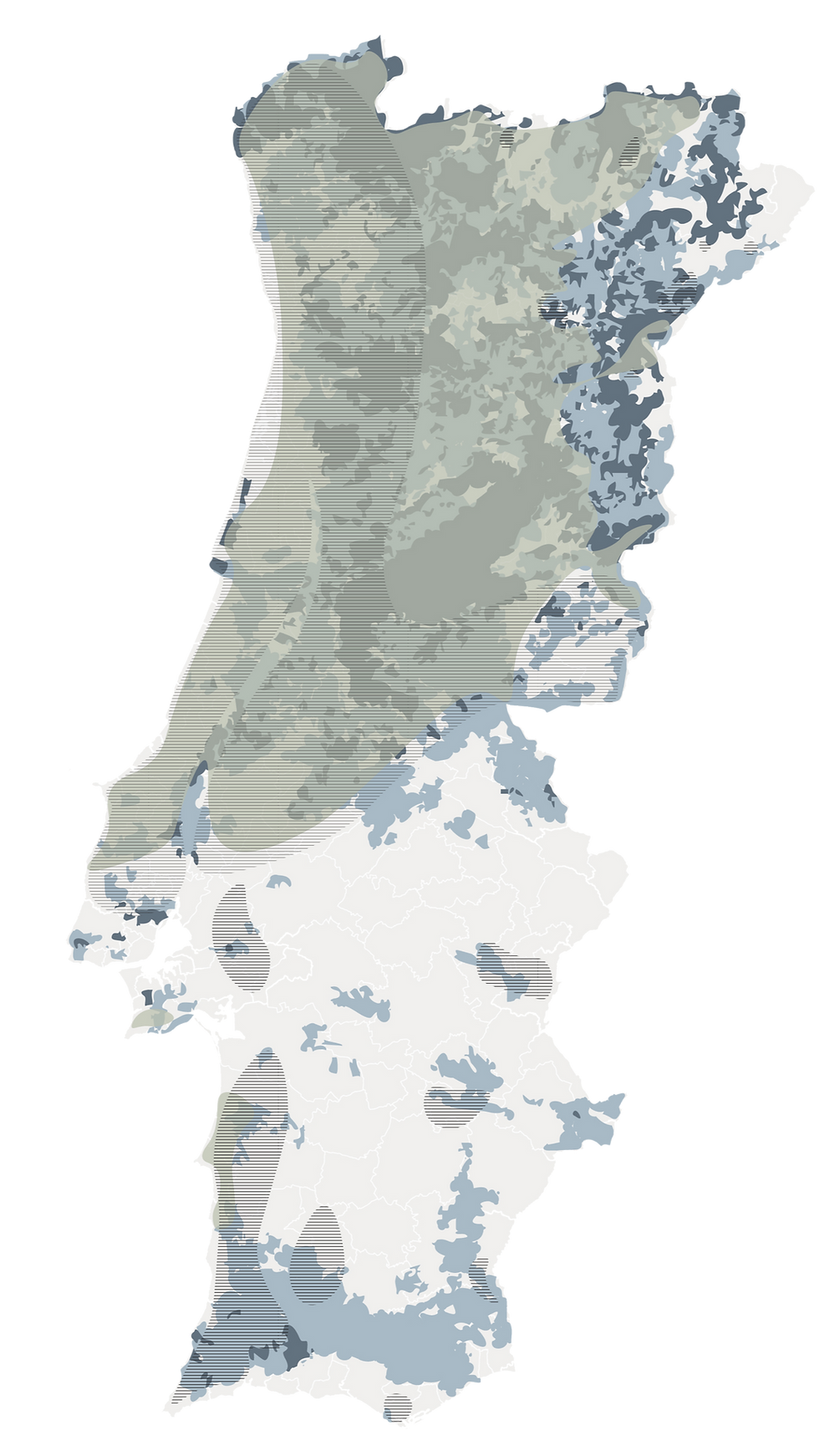
The same problems threatening the ecosystem are affecting the food supply. Reduced water availability, heat stress, and soil degradation will result in more variable and likely lower crop yields. There may be a shift in which crops can be grown, with increased reliance on irrigation and higher costs. These factors may price out small farms, adding further stress to the already struggling agriculture sector.
Ultimately, without major improvements in water management, soil conservation, and crop adaptation strategies, Portugal’s agricultural sector risks entering a loop of declining productivity, increasing inequality, and reduced resilience to future climate shocks. (Policies for the Future of Farming and Food in the European Union, OECD, 2023)

Fig.ME.P.CC.08; Authors own, Projected Problems in Portuguese Agriculture (Policies for the Future of Farming and Food in the European Union, OECD, 2023)