
Current Economic Climate
Portugal has a largely service-oriented economy and relies heavily on trading within the EU to countries like Spain, France, and Germany. Main exports include electrical and motor machinery, cork, olive oil, wine, and agricultural produce.
Public debt currently sits above 90% of the country's GDP but nevertheless is experiencing steady growth and declining unemployment rates.
(European Commission, 2025).
On the flip side, Portugal still depends heavily on importing energy, vehicles, and industrial machinery. As such, energy dependence is a key concern that the Portuguese government is currently aiming to rectify by investing heavily in renewables through the EU’s Recovery and Resilience funding (UN Comtrade Database, 2025).
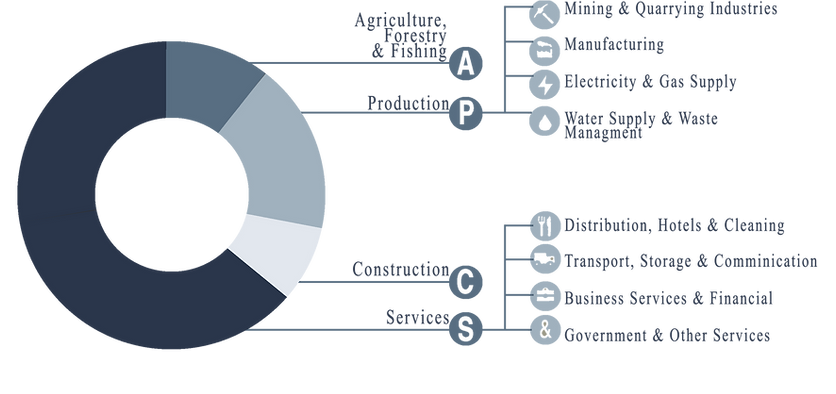
Fig. ME.P.EC.01; Authors Own, 'Portugal GDP Breakdown 2025', based on (European Commission, 2025)

Fig. ME.P.EC.02; Authors Own, 'Number of Enterprises and Persons Employed by Sector', based on (EuroStat, 2025)


