Healthcare

Fig.ME.S.HC.01; Authors Own, 'Healthcare Sketch'
RESEARCH JUSTIFICATION
Understanding the structure and trends of Scotland’s National Health Service is crucial to ensure equitable healthcare. The system currently faces increasing pressures from workforce shortages and an aging population which increase the demand for services.
What are the main challenges facing healthcare in Scotland?
Scotland Healthcare Structure
NHS Structure
The NHS (National Health Service) is a UK wide institution funded by taxpayers that provides free healthcare to all UK citizens. In 1999, responsibility for healthcare was devolved from the UK Government to the individual nations of the UK. Since then, the Scottish government has held full authority over healthcare policy and related decision making in Scotland (Kelly Shuttleworth, Elspeth Nicholson, Institute for Government “Devolution of NHS”, 2020).
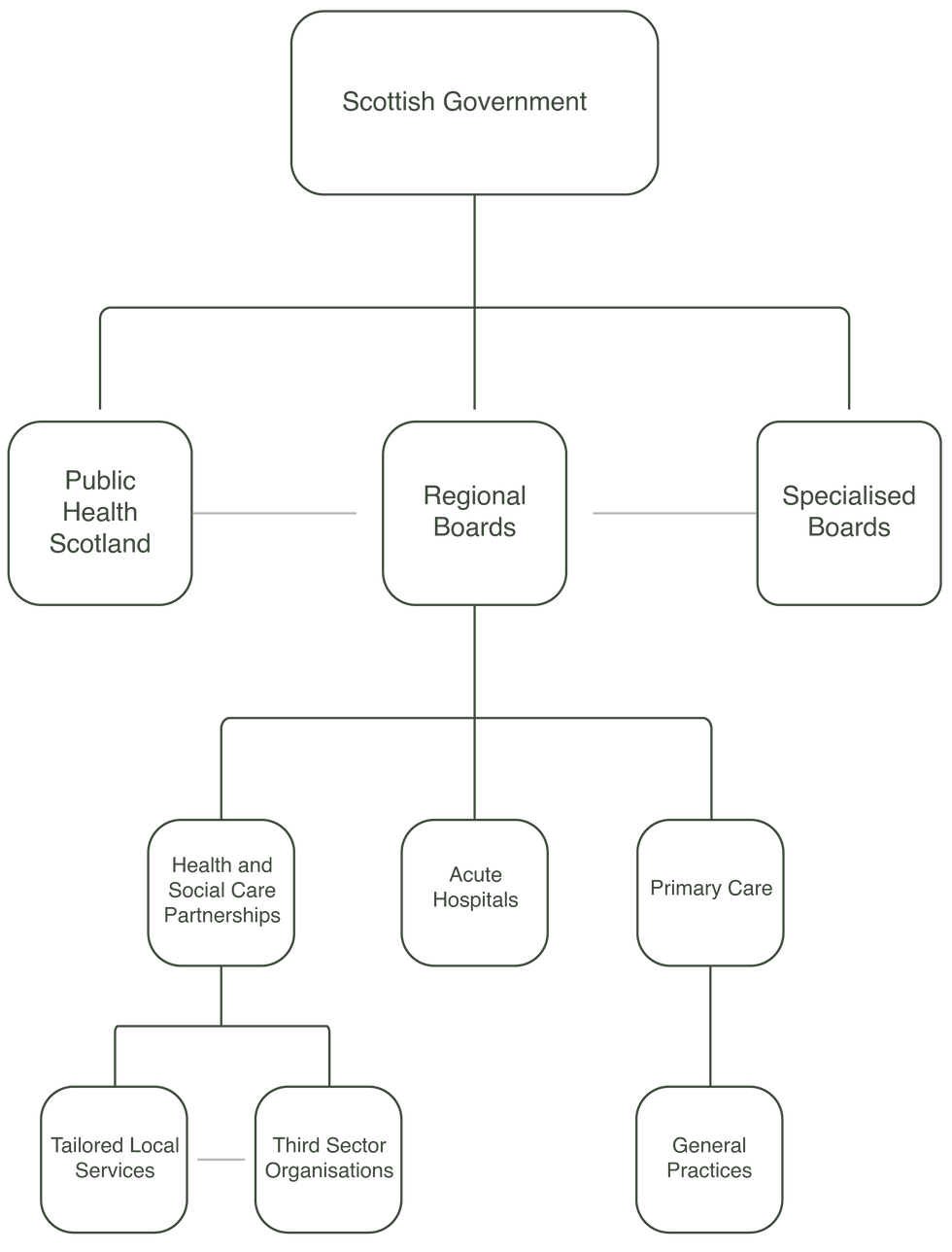
NHS Scotland operates as a hybrid system, with most authority centralised within the Scottish Parliament, which sets policy direction and allocates funding. These decisions are then implemented by regional health boards, which operate with limited autonomy (NHS, “About NHS Scotland”, 2025).
“The delivery of NHS services must be reformed for Scotland’s health service to remain affordable and sustainable”
“The mix of local, regional, and national patterns across Scotland makes decision making and accountability difficult”
- Stephen Boyle (Healthandcare.scot “NHS Governance must be strengthened, says watchdog”, 2025)
Fig.ME.S.HC.02; Authors Own, 'NHS Structure'
There are 14 Regional Health Boards across Scotland, each responsible for planning and delivery healthcare services within its area. These boards receive legislation and funding from the Scottish Government and have discretion over how resources are used, providing this aligns with national priorities. They are supported by national boards that deliver specialist services and expertise. Individual hospitals and practices operate under the guidance and funding of their regional boards, delivering healthcare directly to local communities (NHS, NHS “About NHS Scotland”, 2025).
This audit shows that although individual regional health boards operate independently in theory, in practice their scope is limited by the systems top heavy structure.
“The planning of healthcare in Scotland is becoming more complex and the Scottish government needs to ensure lines of accountability and decision-making are clear”
- Stephen Boyle (Healthandcare.scot “NHS Governance must be strengthened, says watchdog”, 2025)

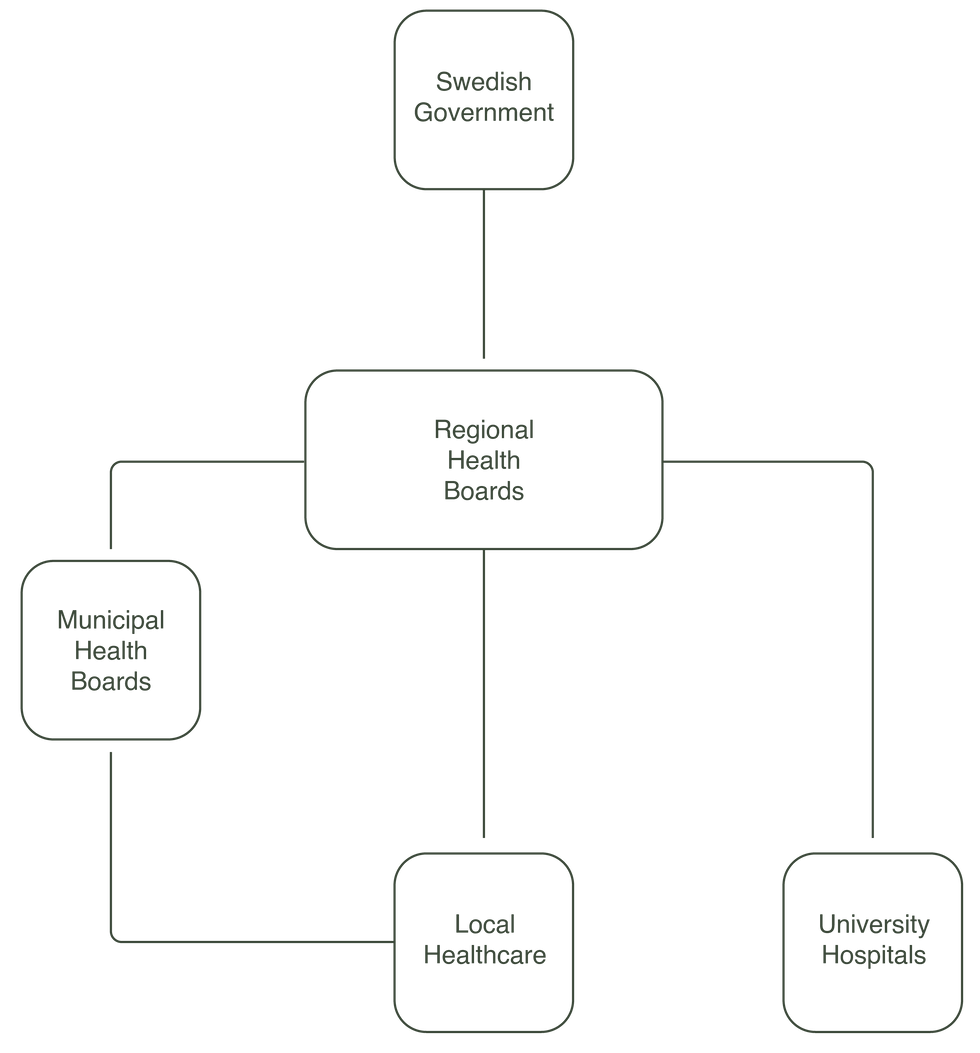


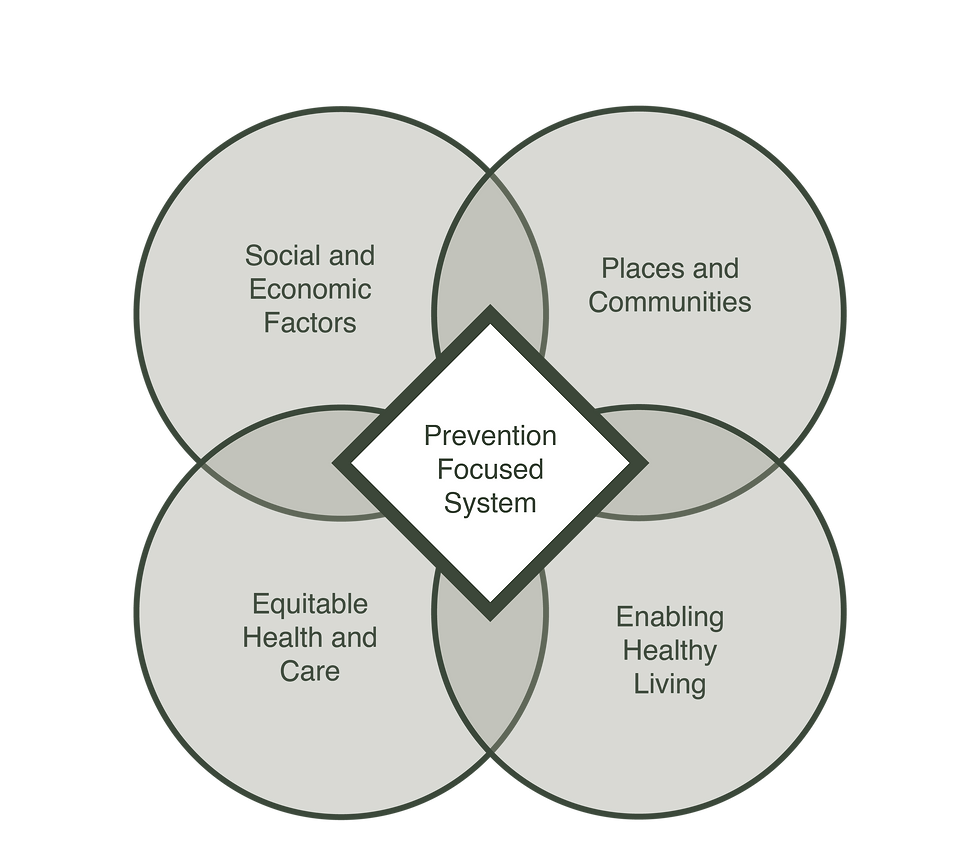
Challenges and Potential Solutions
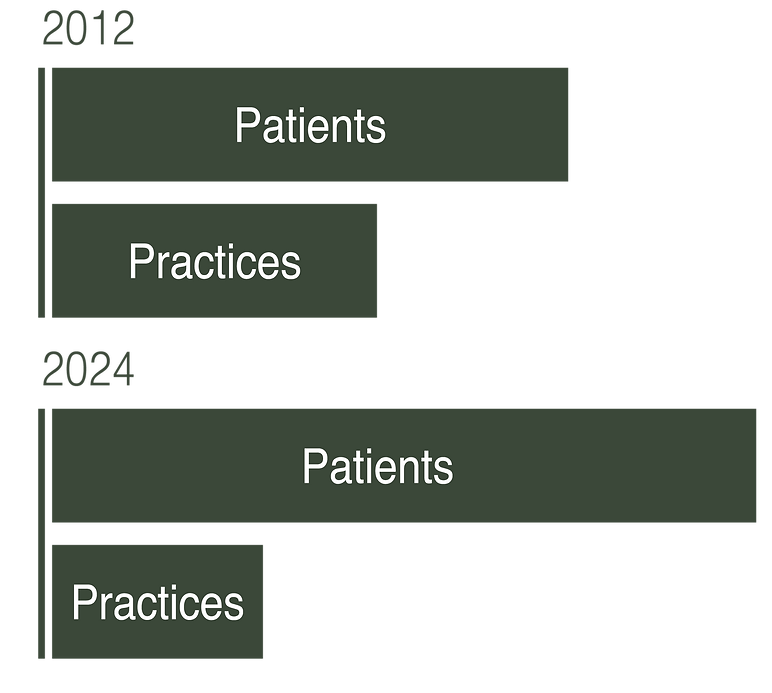
Fig,ME.S.HC.09; Authors Own, 'Increased Pressure on Primary Care Services Scotland', based on, (British Medical Association, "The sustainability crisis in GPs currently 'seeking work' in Scotland alone", 2025)

Fig.ME.S.HC.08; Authors Own, 'Emergency Healthcare Departments, 30min travel time highlighted'
Strains on the NHS
The Scottish NHS is currently under significant strain, largely due to limited resources and the lasting impact of COVID-19. Since the start of the pandemic, the number of patients waiting for treatment has increased from 256,000 to 560,000 (Public Health Scotland NHS Waiting Times, BMA, 2025). This has had a substantial effect on access to care. While most people continue to rely on public healthcare, approximately 29% have turned to private healthcare since the pandemic, due to long waiting times. This shift increases inequality, as those in more deprived circumstances are less able to afford private care (Hayley Barnes, About a Third of Scots Have accessed Private Health Care For Someone In Their Household, 2025).
Almost half of GP practices in Scotland, 44.8%, describe their future as “precarious” or “unsustainable” due to “unimaginable” workloads.
Anonymous Patient (Healthcare at a distance, accessed 2025)
Pressure is particularly evident in primary care. This situation is driven by rising patient numbers alongside a fall in GP practices, from 1,000 in 2012 to 889 in 2024 (British Medical Association, “The sustainability crisis in GP practice in Scotland”, 2024). Financial pressures workforce shortages have contributed to this decline, prompting the Scottish Government’s GP recruitment campaign in 2022 (Scottish Government, “Launch of GP recruitment campaign”, 2022).
Despite these efforts, approximately 160 full time equivalent GPs remain unemployed. Funding these roles, the equivalent to 1% of the annual Scottish NHS budget, could deliver “approximately 700,000 additional appointments annually”, easing waiting times nationwide (Anna Colivicchi, 2025).
A resilient healthcare system should be able to respond to both low and high demand. However, years of cost saving have limited investment in resilience, leaving the Scottish NHS operating close to capacity. This has reduced its ability to absorb shocks, as demonstrated during the COVID-19 pandemic, when limited capacity led to shortages of staff and resources.

Fig,ME.S.HC.10; Authors Own, 'Que Sketch'


